
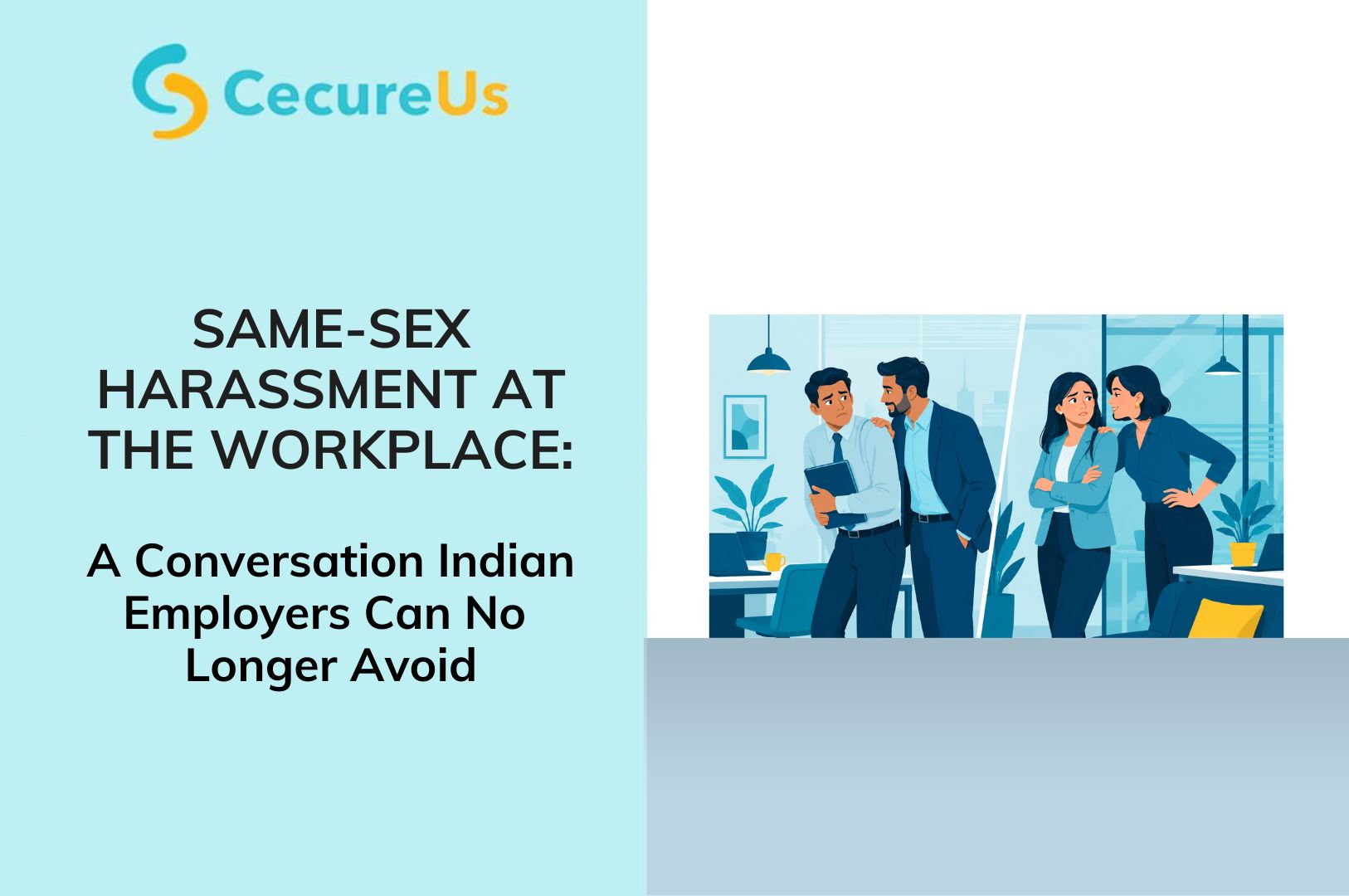
When we speak about workplace sexual harassment in India, the first image that often comes to mind is a woman being harassed by a man.
This perception is understandable.
The Sexual Harassment of Women at Workplace (Prevention, Prohibition and Redressal) Act, 2013, commonly known as the POSH Act, was enacted to protect women from sexual harassment at the workplace.
But workplaces today are far more diverse than they were a decade ago.
Organisations now work with employees across gender identities, sexual orientations, cultures, generations, and lived experiences. As a result, employers are increasingly facing workplace situations that do not always fit neatly within the traditional framework of the law.
One such area is same-sex harassment at the workplace.
What is Same-Sex Harassment?
Same-sex harassment refers to sexually inappropriate, unwelcome, or dignity-violating behaviour involving individuals of the same sex or gender.
This may include complaints involving:
- A man harassing another man
- A woman harassing another woman
- Harassment involving LGBTQIA+ employees
- Harassment involving transgender or gender-diverse employees
- Sexually coloured jokes, comments, gestures, messages, or physical conduct between employees of the same gender
The important point is this:
Harassment is about behaviour, not sexual orientation.
A complaint should not become less serious merely because both parties are of the same sex.
Unwelcome advances, repeated personal messages, sexually coloured remarks, inappropriate physical contact, requests for intimacy, stalking, or conduct that creates a hostile work environment can be equally distressing, irrespective of who engages in such behaviour.
Why Indian Employers Often Struggle With Same-Sex Harassment Complaints
Many organisations are still unsure about how to respond when a complaint involves two men, two women, or employees from the LGBTQIA+ community.
This uncertainty can lead to hesitation.
And hesitation can lead to unfair outcomes.
Some common assumptions include:
- “This may just be a misunderstanding.”
- “Two men cannot have a sexual harassment complaint.”
- “This is too sensitive to investigate.”
- “The POSH Act does not cover this, so HR cannot act.”
- “If we inquire, we may expose someone’s sexual orientation.”
All these assumptions are risky.
A workplace complaint must be assessed based on facts, evidence, impact, and conduct — not stereotypes.
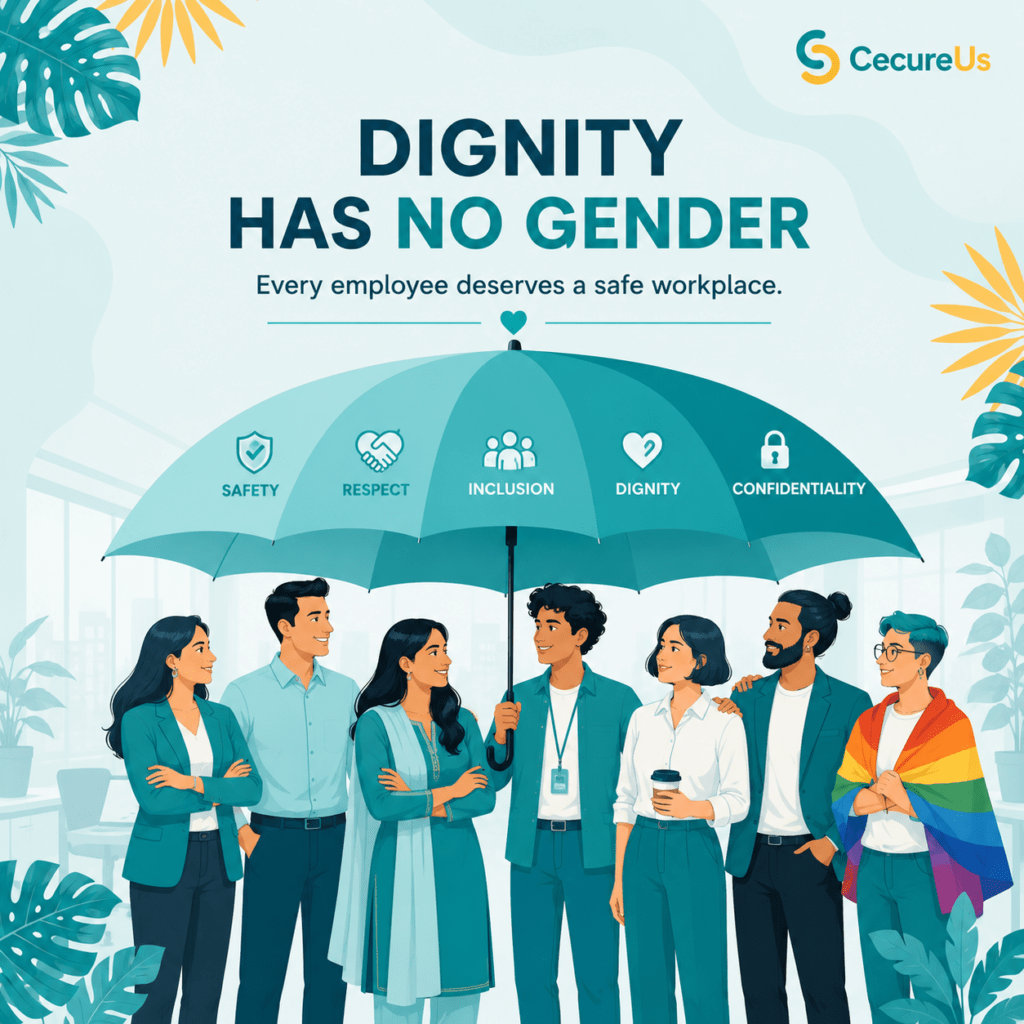
Every employee deserves dignity, safety, confidentiality, and a fair hearing.

What Does the POSH Act Say?
The POSH Act provides a specific legal framework for addressing sexual harassment complaints raised by women at the workplace.
Under the Act, an aggrieved woman may file a complaint against a respondent, irrespective of the respondent’s gender. This means a woman can raise a POSH complaint even if the alleged harasser is another woman.
However, the POSH Act does not expressly cover complaints where the complainant is male or where the matter falls outside the definition of an “aggrieved woman” under the Act.
This creates a practical challenge for employers.
For example:
- If a male employee complains of sexual harassment by another male employee, it may not fall under the POSH Act.
- If a transgender or gender-diverse employee raises a complaint, the organisation may need to carefully assess the appropriate legal and policy framework.
- If the complaint involves LGBTQIA+ employees, the matter must be handled with sensitivity, confidentiality, and neutrality.
But this does not mean employers can ignore such complaints.
“Not Covered Under POSH” Does Not Mean “No Action Required”
A common mistake organisations make is assuming that if a complaint does not fall under POSH, no formal action is required.
This is incorrect.
Employers have a broader responsibility to provide a safe, respectful, and non-discriminatory workplace for all employees.
Same-sex harassment complaints may be addressed through:
- Code of Conduct policies
- Anti-harassment policies
- Workplace dignity policies
- Disciplinary policies
- Diversity, Equity, Inclusion and Belonging frameworks
- LGBTQIA+ inclusion policies
- Transgender inclusion and non-discrimination policies
- Employment contracts and service rules
In simple terms:
If the behaviour violates workplace dignity, the employer must respond.
“It is not under POSH” should never become a reason to ignore misconduct.
Why Same-Sex Harassment Complaints Require Sensitivity
Same-sex harassment complaints often come with an added layer of stigma.
A complainant may worry that reporting the incident could lead to questions about their personal life, sexual orientation, or gender identity.
In some cases, the very act of making a complaint may unintentionally reveal something about an employee that they may not wish to disclose publicly.
This places a greater responsibility on employers, HR teams, managers, and investigators.
Confidentiality is not just a procedural requirement.
It is a trust-building measure.
What Should HR and Investigators Focus On?
In any workplace harassment complaint, the inquiry should focus on the conduct complained of.
The key questions should be:
- What happened?
- Was the conduct unwelcome?
- Was there a power imbalance?
- Did the behaviour affect the dignity, safety, or mental well-being of the complainant?
- Was there repeated behaviour despite discomfort or refusal?
- Is there evidence such as messages, witnesses, CCTV footage, emails, call records, or circumstantial material?
- Did the behaviour violate the organisation’s policies?
Questions about an employee’s sexual orientation or personal identity should generally be avoided unless directly relevant to the facts of the complaint.
The inquiry must not become intrusive, moralistic, or biased.
The Role of Gender-Neutral Anti-Harassment Policies
Indian employers can no longer rely only on minimum legal compliance.
The future of workplace safety requires organisations to build gender-neutral anti-harassment policies that protect all employees.
A strong policy should clearly define:
- Sexual harassment
- Same-sex harassment
- Bullying and intimidation
- Hostile work environment
- Inappropriate digital communication
- Misuse of power or authority
- Retaliation
- Confidentiality expectations
- Complaint reporting channels
- Inquiry process
- Disciplinary consequences
This helps HR teams respond consistently instead of making case-by-case assumptions.
Why This Matters for Inclusive Workplaces
A truly inclusive workplace is not built only through Pride Month celebrations, DEI campaigns, or policy statements.
It is built when employees know that their dignity will be protected even in difficult, unfamiliar, or uncomfortable situations.
Same-sex harassment may still be underreported in Indian workplaces.
But underreported does not mean unreal.
Employees may remain silent because they fear ridicule, disbelief, retaliation, outing, or career damage.
When organisations handle such complaints fairly, they send a strong message:
Every employee matters. Every complaint deserves dignity. Every workplace must be safe.
What Employers Should Do Now
Indian organisations should proactively review their workplace policies and complaint mechanisms.
Here are a few practical steps:
- Review your POSH policy and anti-harassment policy
Ensure there is clarity on what falls under POSH and what will be handled under broader workplace conduct policies. - Create a gender-neutral anti-harassment framework
Protect employees across gender identities and sexual orientations. - Train HR, managers, and Internal Committee members
Help them understand same-sex harassment, LGBTQIA+ inclusion, confidentiality, bias, and fair inquiry practices. - Define reporting channels clearly
Employees should know where to report concerns that may not fall under POSH. - Maintain confidentiality strictly
Avoid unnecessary disclosure of personal identity, sexual orientation, or gender identity. - Ensure fair inquiry and natural justice
Both complainant and respondent must be heard fairly. - Document the process carefully
Maintain evidence, statements, findings, and action taken. - Build a culture of dignity
Prevention is not just about law. It is about everyday behaviour.
Conclusion
The real question is not whether the law uses the term “same-sex harassment.”
The real question is:
Was someone’s dignity violated at work?
If the answer is yes, the employer must act.
Same-sex harassment at the workplace is a conversation Indian employers can no longer avoid. Organisations that respond with fairness, confidentiality, empathy, and procedural clarity will build stronger trust with employees.
Workplace safety must not depend on gender, identity, or orientation.
It must be available to everyone.
FAQs on Same-Sex Harassment at the Workplace in India
- Is same-sex harassment covered under the POSH Act in India?
The POSH Act protects women from sexual harassment at the workplace. A woman can file a POSH complaint even if the respondent is another woman. However, complaints by male employees or certain gender-diverse employees may not fall directly under the POSH Act and may need to be addressed through the organisation’s Code of Conduct, anti-harassment policy, or disciplinary framework.
- Can a man file a sexual harassment complaint against another man at work?
Yes, a male employee can raise a complaint with the employer. While such a complaint may not fall under the POSH Act, the organisation should still address it through its anti-harassment policy, Code of Conduct, disciplinary rules, or workplace dignity framework.
- Should organisations have gender-neutral anti-harassment policies?
Yes. A gender-neutral anti-harassment policy helps organisations protect all employees, including men, women, transgender persons, and LGBTQIA+ employees. It also gives HR teams a clear process to handle complaints that may fall outside the POSH Act.
- How should HR handle same-sex harassment complaints?
HR should handle such complaints with confidentiality, neutrality, sensitivity, and procedural fairness. The focus should be on the alleged conduct, evidence, impact, and policy violation — not on the sexual orientation or personal identity of the parties.
- Why is same-sex harassment underreported?
Same-sex harassment is often underreported because employees may fear stigma, ridicule, disbelief, retaliation, or unwanted disclosure of their sexual orientation or gender identity. Employers must create safe reporting channels and build trust through fair processes.
CecureUs Can Support Your Organisation
CecureUs helps organisations build safer, inclusive, and legally compliant workplaces through:
- POSH compliance and Internal Committee training
- Gender-neutral anti-harassment policy review
- Code of Conduct training
- DEI and LGBTQIA+ inclusion workshops
- Workplace dignity and respectful behaviour sessions
- Fair inquiry and investigation support
To build a safer and more inclusive workplace, connect with us at www.cecureus.com.
For more blogs and articles, visit our official website. Contact us for workshops and queries related to POSH, EAP (Employee Assistance Program) , Diversity and Inclusion and Code Of Conduct.