In the corporate world, sleep is often the first thing we compromise.
Late-night deadlines, global calls, family responsibilities, or “just one more episode”—they all eat into our rest. Over time, we’ve been conditioned to believe that sleep is a luxury, or worse, a sign of laziness.
But the reality is far more serious:
When we compromise on sleep, we compromise on our mental health, emotional balance, and performance.
And one of the most misunderstood signs of poor sleep?
Snoring.
The Myth of the “Peaceful Snore”
Many believe that snoring is a sign of deep, restful sleep.
In reality, it is often the opposite.
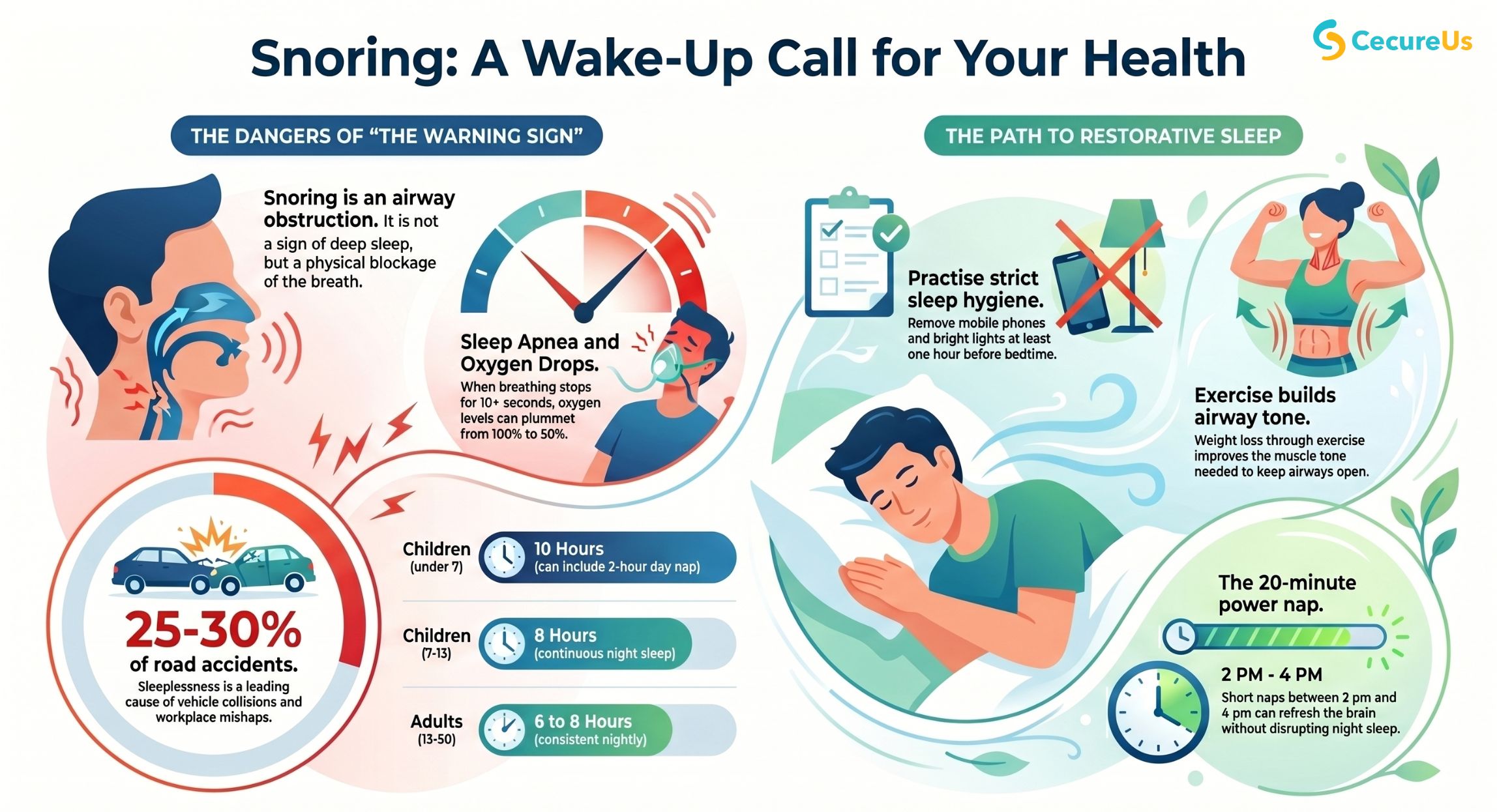
Snoring typically occurs when your airway is partially blocked. This reduces oxygen flow, forcing your brain to stay alert to keep you breathing. Think of it as your brain acting like a night security guard—always on duty, never fully switching off.
So even if you’re in bed for 7–8 hours, your brain may never truly rest.
The result?
- You wake up tired
- You feel mentally foggy
- You experience unexplained fatigue during the day
What looks like “deep sleep” may actually be disturbed, low-quality sleep.
Why This Matters More Than You Think
Poor sleep doesn’t just make you tired—it directly impacts how you think, feel, and behave at work.
- Irritability and Emotional Reactivity
When sleep is compromised, your ability to regulate emotions drops.
You may find yourself:
- Getting irritated faster
- Reacting more sharply
- Struggling with patience in conversations
- Anxiety and Low Mood
Irregular sleep patterns—especially those driven by late-night screen use—disrupt brain chemistry. Over time, this increases vulnerability to anxiety and low mood.
For many professionals, this goes unnoticed until it begins affecting relationships and work engagement.
- Reduced Cognitive Performance
Sleep deprivation affects:
- Focus and attention
- Memory and recall
- Decision-making ability
In a high-performance environment, this can quietly translate into missed details, poor judgment, and reduced productivity.
Corporate Red Flags You Shouldn’t Ignore
Sleep issues rarely show up as “I didn’t sleep well.” They show up as behaviours:
Drowsiness While Driving
Sleep deprivation can lead to microsleeps—brief, uncontrollable lapses in attention. A significant number of road accidents are linked to this.
The Afternoon Slump
If you regularly feel exhausted after lunch and depend on caffeine to function, it’s a sign your night sleep isn’t restorative.
Late-Night Scrolling
Endless scrolling of reels or short videos stimulates the brain and delays sleep. This “dopamine loop” prevents your brain from entering deep sleep mode.
Breaking the Myths: Simple Sleep Hygiene Practices
Protecting your sleep doesn’t require drastic change—just consistent habits.
- Make Your Bedroom a Sleep Zone
Avoid using mobiles, laptops, or TVs in bed.
Screen light interferes with your brain’s ability to transition into deep sleep.
- Limit Stimulants
Avoid caffeine and alcohol in the evening.
Alcohol may make you feel sleepy, but it disrupts natural sleep cycles.
- Eat Early and Light
Finish dinner at least 2 hours before bedtime.
Heavy meals close to sleep keep your body active when it should be winding down.
- Use Power Naps Carefully
A short 20-minute nap between 2–4 PM can help.
Longer naps can interfere with your night sleep.
- Choose Mindfulness Over Screens
Instead of scrolling, try:
- Reading a physical book
- Simple breathing exercises
- Quiet reflection
These help your brain switch from “active mode” to “rest mode.”
Final Thought: Don’t Ignore the Snore
Sleep is not passive time—it is when your body and brain repair, reset, and recharge.
If you or your partner:
- Snore regularly
- Feel tired despite spending enough time in bed
- Experience frequent fatigue or brain fog
…it may be more than just poor sleep. It could be a signal your body is asking for attention.
Don’t normalize it. Don’t ignore it.
Because in the long run, protecting your sleep means protecting:
- Your mental health
- Your relationships
- Your performance at work
Protect your sleep. Protect your mind.
📞 For more wellness tips or support: Call 1800 121 9497 / 7200500221
📧 Email: wellness@cecureus.com