

I Said Yes Again. But I Wanted to Say No.
A workplace conversation about boundaries, capacity, and learning to pause.
It was 5:45 p.m. at the office. Ananya was still looking at her laptop, trying to finish the work already on her list.
Just then, her colleague Meera walked over.
Meera: Hey, are you done for the day?
Ananya: Almost. I just need to finish this. And now my manager has asked me to take up one more task.
Meera: One more?
Ananya: Yeah. I said, “Sure, I can do it.”
Meera: Can you actually take it up today?
Ananya: Honestly? No. I’m already exhausted. But saying no felt… difficult.
Meera: Why?
Ananya: I don’t know. I kept thinking, ‘What will they think of me?’ ‘Will they be disappointed?’ ‘What if they get upset?’ So I just said yes.
Meera: Sounds familiar.
Ananya: Very. And it’s not just at work. I do the same thing with friends and family. I agree to plans when I actually need rest. I stay available when I want some time to myself. I help even when I’m already running low on energy.
Meera: Maybe the problem isn’t that you care too much. Maybe you’ve just gotten used to putting everyone else’s comfort before checking in with yourself.
Ananya: But if I say yes, doesn’t that mean I’m okay with it?
Meera: Not always. You can say yes while feeling exhausted, overwhelmed, frustrated, or even resentful.
Ananya: So what am I supposed to do?
Meera: Start with something small. You don’t have to suddenly become the person who says no to everything.
Ananya: Then what?
Meera: Pause before you answer. Instead of automatically saying, ‘Yes, sure,’ say, ‘Let me check and get back to you.’
Ananya: That sounds simple.
Meera: It is. But that pause gives you a chance to ask yourself three things: Do I actually have the time? Do I have the energy? And am I saying yes because I genuinely want to—or because I feel guilty saying no?
Ananya: And if the answer is no?
Meera: Then be clear. You could say, ‘I won’t be able to take this up today, but I can look at it tomorrow.’ Or, ‘I understand this is important, but I don’t have the capacity right now.’
Ananya: I always feel like I need to explain myself when I say no.
Meera: You don’t always need a long explanation. A respectful no is still respectful, even when it’s brief.
Ananya: But what if they think I’m not helpful?
Meera: Being helpful doesn’t mean being available all the time. And setting a boundary isn’t about pushing people away or being selfish. It’s about recognising your limits and communicating them clearly.
Ananya looked back at the message on her screen. She had already said yes. But she realised she could still have a conversation about the timeline.
Ananya: Maybe I can tell them I can take it up tomorrow instead of trying to finish everything tonight.
Meera: Exactly. Your goal isn’t to say no to everything. It’s to make sure your yes is actually a yes.
That stayed with Ananya.
Because one extra task can become three. One favour can become a habit. One late night can become a pattern. And slowly, constantly saying yes when you mean no can turn into exhaustion, frustration, and losing touch with what you need.
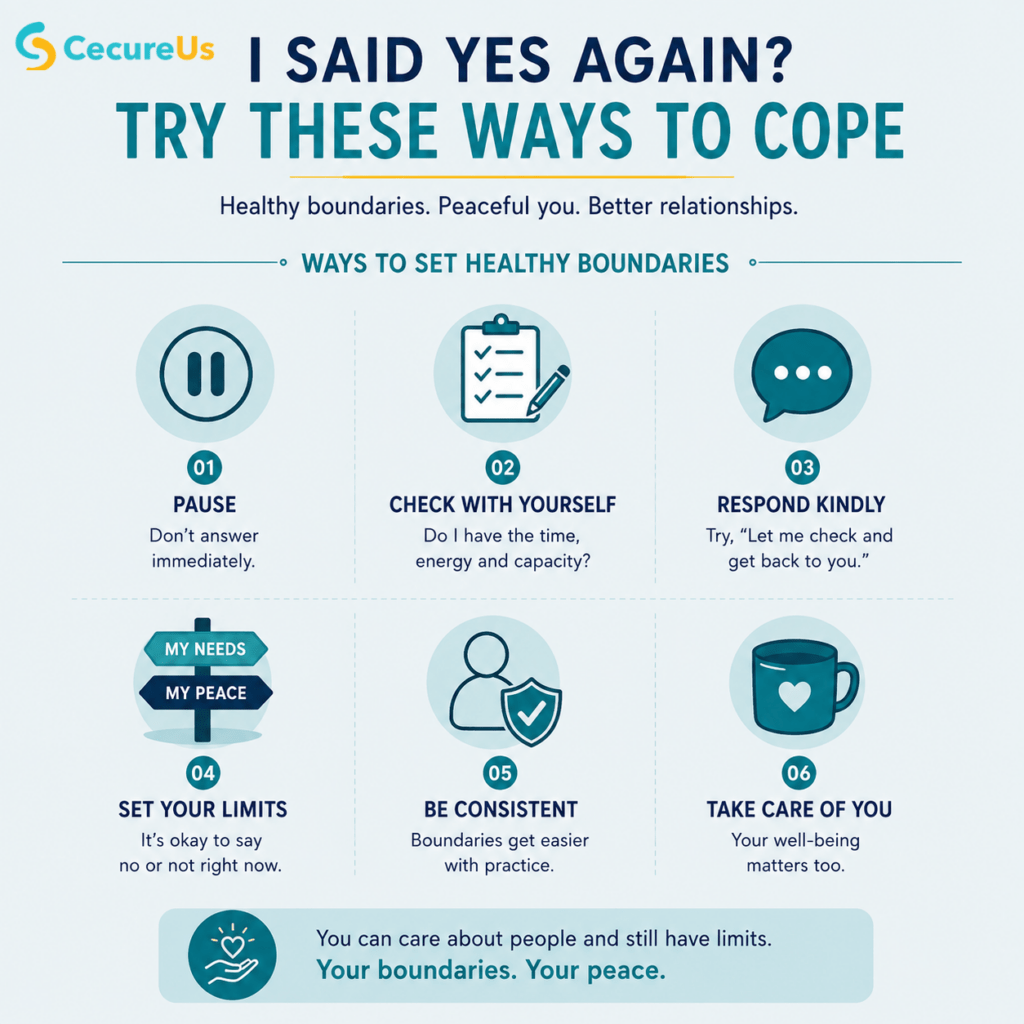
Healthy boundaries don’t mean you care less.
You can care about people and still have limits. You can be helpful and still protect your time. You can be a good colleague, friend, partner, or family member without always being available.
So the next time you catch yourself saying, “Yeah, I’ll manage,” while every part of you wants to say, “I can’t,” pause.
You don’t have to become less caring.
You just have to remember that your needs deserve a place in the conversation too.
Sometimes, a healthy boundary begins with a pause.
For any queries related to workplace wellbeing, please feel free to reach out to us.
For more blogs and articles, visit our official website. Contact us for workshops and queries related to POSH, EAP (Employee Assistance Program), Diversity & Inclusion, and Code of Conduct.